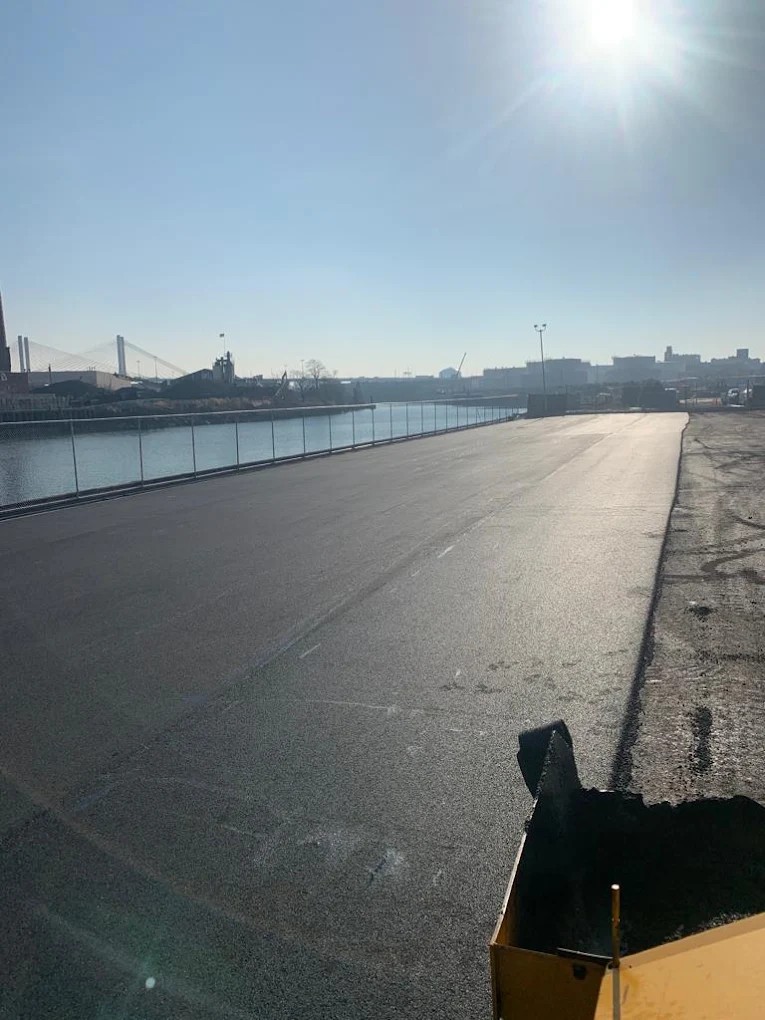
Parking Lot Paving in Queens: What to Expect Start to Finish
Your trusted partner in College Point.
Queens, NY is home to thousands of commercial properties — from the retail strips along Northern Boulevard and Union Turnpike to the sprawling industrial campuses of College Point and the medical complexes of Jamaica and Flushing. Every one of these properties depends on well-constructed parking lots to handle daily traffic from employees, customers, and delivery vehicles. When pavement fails — through cracking, potholing, or drainage collapse — it affects business operations, liability exposure, and property values almost immediately. Understanding exactly what happens during a professional parking lot paving project helps property owners in Queens set realistic expectations, ask the right questions, and recognize when a contractor is cutting steps they shouldn't.
Grey Ruso - Asphalt, Paving & Construction has been completing commercial parking lot paving projects in College Point, Queens, and across the NYC metro area since 1987. As a family-owned paving contractor with nearly four decades of experience, Grey Ruso handles every phase of a parking lot project in-house — from the initial site assessment and drainage design through final striping and cleanup. Property managers and facilities directors across Queens County trust Grey Ruso because the company's crews understand the specific soil conditions, municipal permitting requirements, and traffic control challenges common to urban commercial sites in New York City. Grey Ruso
Before any equipment arrives on-site, a qualified paving contractor will conduct a thorough site assessment that examines the existing pavement condition, subgrade stability, drainage patterns, and utility locations. In College Point and across Queens, this step is especially important because much of the borough sits on reclaimed or filled land with variable subgrade bearing capacity. The assessment determines whether a full-depth reclamation is necessary, whether existing drainage structures are serviceable, and what mix design will best handle the expected traffic load. Grey Ruso's project managers inspect every site personally before issuing a scope of work, ensuring that no surprises arise once the crew mobilizes.
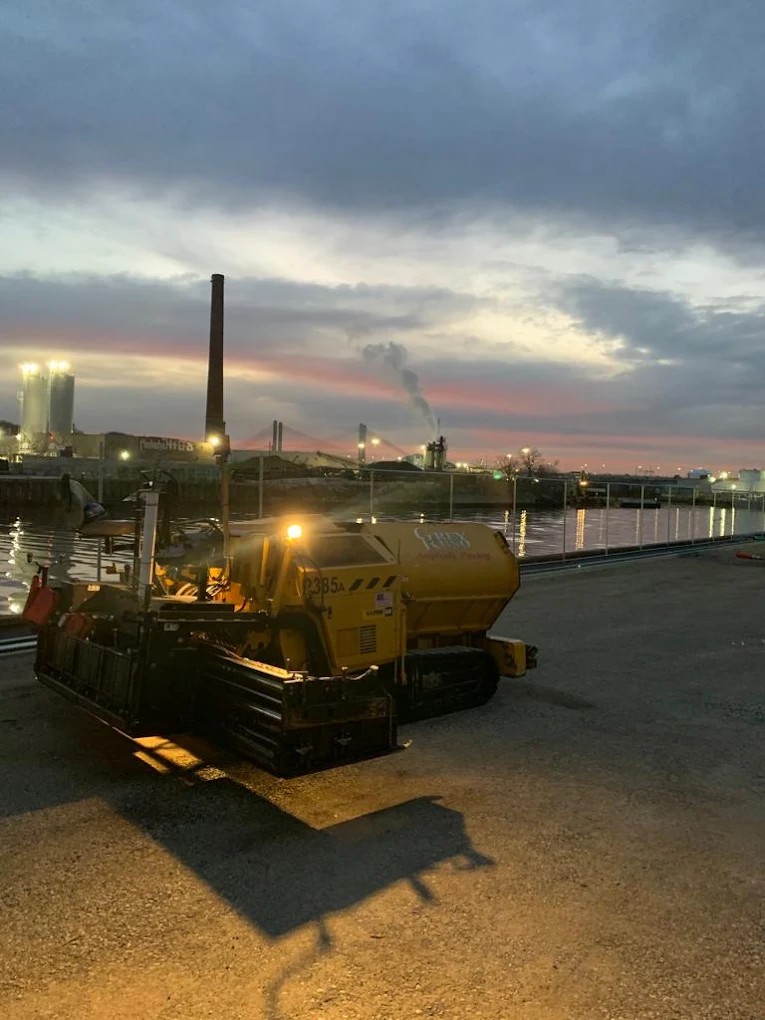
Once the scope is confirmed and permits are obtained, the first physical phase of a parking lot paving project involves removing the existing asphalt surface — either through milling, which grinds the top layer for recycling, or full-depth excavation when the base material has failed. Milling is the more common approach for commercial parking lots in Queens that have a sound base but a deteriorated wearing surface; it preserves the existing subbase investment while creating a fresh bonding surface for the new asphalt. After removal, the base is graded, compacted to the specified density, and inspected before any hot-mix asphalt is placed. Proper base preparation is the single greatest determinant of how long a parking lot will last in College Point's climate, where freeze-thaw cycles stress pavement from mid-November through early March.
Commercial parking lots in Queens, NY typically require a hot-mix asphalt specified to meet New York City Department of Transportation or New York State DOT standards, depending on the project type and location. Heavy commercial traffic sites — including hospital parking structures, school campuses, and industrial loading zones — often require a coarser base course mix topped with a denser wearing course designed to resist rutting under sustained loads. The asphalt mix design accounts for binder content, aggregate gradation, and air void percentage, all of which affect durability under Queens' specific traffic and climate conditions. Grey Ruso works with approved asphalt plants to ensure every mix delivered to a College Point or Queens project meets the required specification.
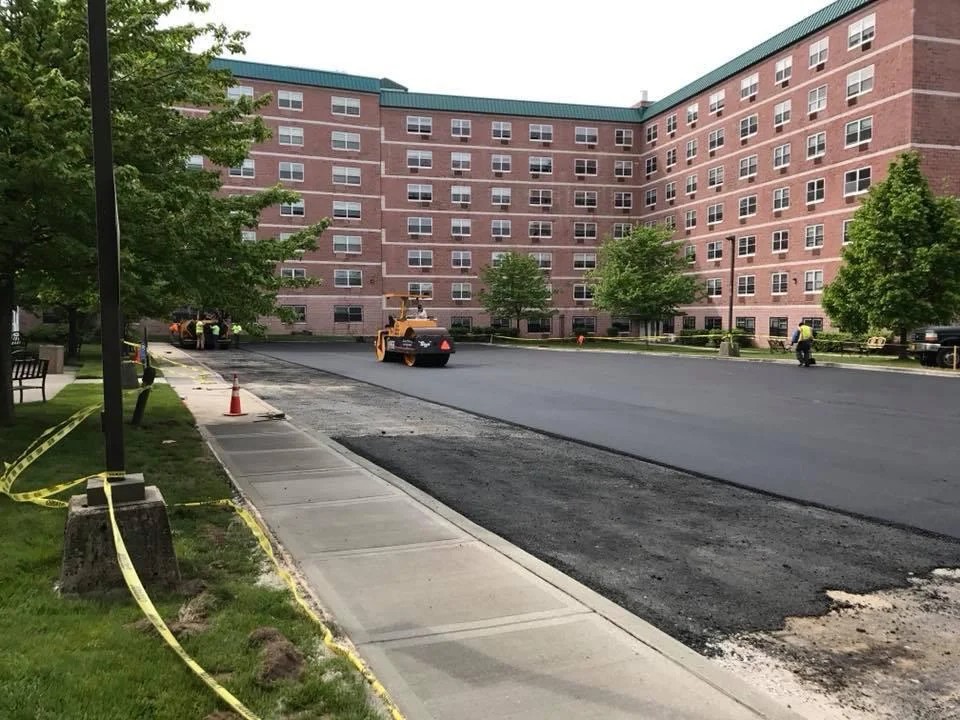
Paving day at a commercial property in Queens requires careful coordination to minimize disruption to business operations while keeping the crew efficient. A professional paving contractor will establish a traffic control plan — often submitted to the local community board or NYC DOT in advance — and set up signage and barriers before the paving equipment arrives. Asphalt delivery trucks pull directly to the paver, which lays the hot mix at the correct depth and cross-slope for drainage. Immediately behind the paver, a series of rollers compact the material to the specified density before it cools. The window for proper compaction is narrow, particularly on cooler autumn days in College Point when ambient temperatures drop quickly after sunset. Experienced crews coordinate deliveries and rolling sequences to maintain optimal compaction throughout the workday.
After the hot-mix asphalt is compacted and the surface cools to ambient temperature — typically within two to four hours in summer and somewhat faster in autumn — the parking lot can be opened to foot traffic and light vehicle use. Heavy vehicle traffic, including delivery trucks, buses, and construction equipment, should be kept off new asphalt for 24 to 72 hours depending on ambient temperature and the thickness of the surface course. In College Point, NY 11356 and across Queens County, paving contractors often recommend waiting for the asphalt to reach full cure — approximately 30 days — before applying seal coat treatments, though striping can typically proceed within a day or two of paving. Following the recommended cure schedule is important: premature heavy loading causes surface deformation that is very difficult and expensive to correct without mill-and-repave operations.
After the asphalt surface is fully compacted and inspected, a comprehensive parking lot paving project includes line striping, installation or repositioning of curb stops and wheel stops, handicapped accessibility markings per ADA requirements, and signage reinstallation. Drainage structure frames and grates are adjusted to final grade during paving so that no ponding occurs near catch basins — a common failure point on poorly executed Queens commercial paving projects. Grey Ruso's crews handle all of these finishing trades in-house rather than subcontracting them, which keeps the project timeline tight and accountability clear. A final walkthrough with the property manager ensures that every item in the original scope has been delivered before the crew demobilizes from the site. Grey Ruso
Grey Ruso - Asphalt, Paving & Construction serves customers throughout College Point and Queens County, including Flushing, Whitestone, Bayside, Astoria, Jackson Heights, Long Island City, Jamaica, and Forest Hills. Whether you're in Woodhaven or Fresh Meadows, our paving contractor team is ready to handle commercial parking lot paving, asphalt resurfacing, and drainage system construction at your facility.
Most commercial parking lot paving projects in Queens take between one and five days depending on lot size, scope of base work, and permitting requirements. Grey Ruso's College Point-based crews work efficiently to minimize downtime for your business, often completing mid-size lots of 10,000 to 30,000 square feet in a single continuous shift. Project timelines are confirmed during the site assessment phase.
Commercial paving projects in New York City typically require permits from NYC DOT, DEP, or both, depending on whether work affects public right-of-way or drainage infrastructure. Grey Ruso handles the permit coordination process for clients across Queens and NYC's five boroughs, ensuring full compliance with city regulations and avoiding work stoppages. Permit timelines are factored into the project schedule from the outset.
An asphalt overlay places new hot-mix asphalt directly over the existing surface after milling, which is suitable when the subbase is still structurally sound. Full-depth reclamation removes and reprocesses all existing material before building up a new base and surface, and is required when the subgrade has failed or drainage has deteriorated. Grey Ruso recommends the right approach after a thorough on-site evaluation of your College Point or Queens facility.
In College Point and across Queens, freshly paved asphalt is typically firm enough for light passenger vehicles within two to four hours of compaction in warm weather. Heavy trucks and loaded delivery vehicles should be restricted for 24 to 72 hours. Grey Ruso schedules paving phases to allow your facility to maintain partial operations throughout the project when possible, minimizing impact on your tenants, employees, or customers.
Yes. Grey Ruso - Asphalt, Paving & Construction serves clients across all five NYC boroughs, Long Island, and Westchester County. The company has completed commercial and industrial asphalt paving projects for hospitals, schools, office parks, and municipal facilities throughout the greater New York region since 1987, and its crews are experienced with the permitting and engineering standards required in each jurisdiction.